

- All
- Product Management
- News and Information
- Introduction content
- Business outlets
- Frequently Asked Questions
- Corporate Video
- Corporate Portfolio

"Replacing Plastic with Bamboo" Puts an End to White Pollution in Farmlands — Yangzhu Technology Debuts Bamboo Fiber Mulch Film at Ningbo Annual Conference
2025-07-07 10:08
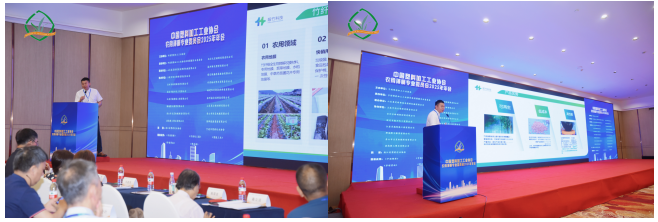
On June 11, 2025, at the annual meeting of the Agricultural Film Professional Committee of the China Plastics Processing Industry Association, a "nature-inspired, nature-friendly" solution drew significant attention from the attending experts. Rao Shizhen, General Manager of Fujian Yangzhu New Materials Technology Co., Ltd. (hereafter referred to as "Yangzhu Technology"), showcased his team's groundbreaking achievement: "Bamboo Fiber Fully Biodegradable Mulch Film." This innovative technology not only addresses the core challenges plaguing the agricultural film industry but also offers a powerful, practical solution for tackling the global issue of "white pollution" in agriculture—both in China and worldwide—while simultaneously supporting the nation's strategic initiative to replace plastics with bamboo. 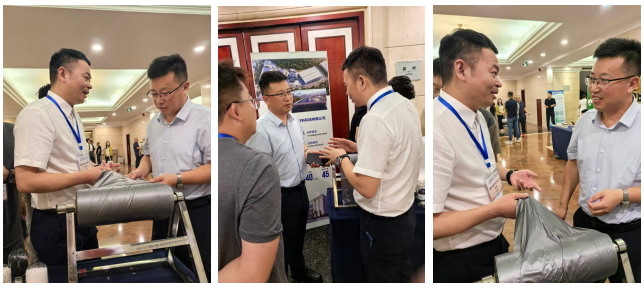
(General Manager Rao Shizhen exchanges views with Professor He Wenqing, Deputy Director of the Western Center at the Chinese Academy of Agricultural Sciences, Chief Scientist at the Institute of Environmental and Development under CAAS, Deputy Director of the Institute of Environmental Protection at CAAS, and a cadre dispatched to Xinjiang under the supervision of the Organization Department of the CPC Central Committee, as well as a doctoral supervisor, regarding the company’s fully biodegradable bamboo-fiber mulch film product.)
I. Agriculture's "White Pollution" Urgently Needs to Be Addressed
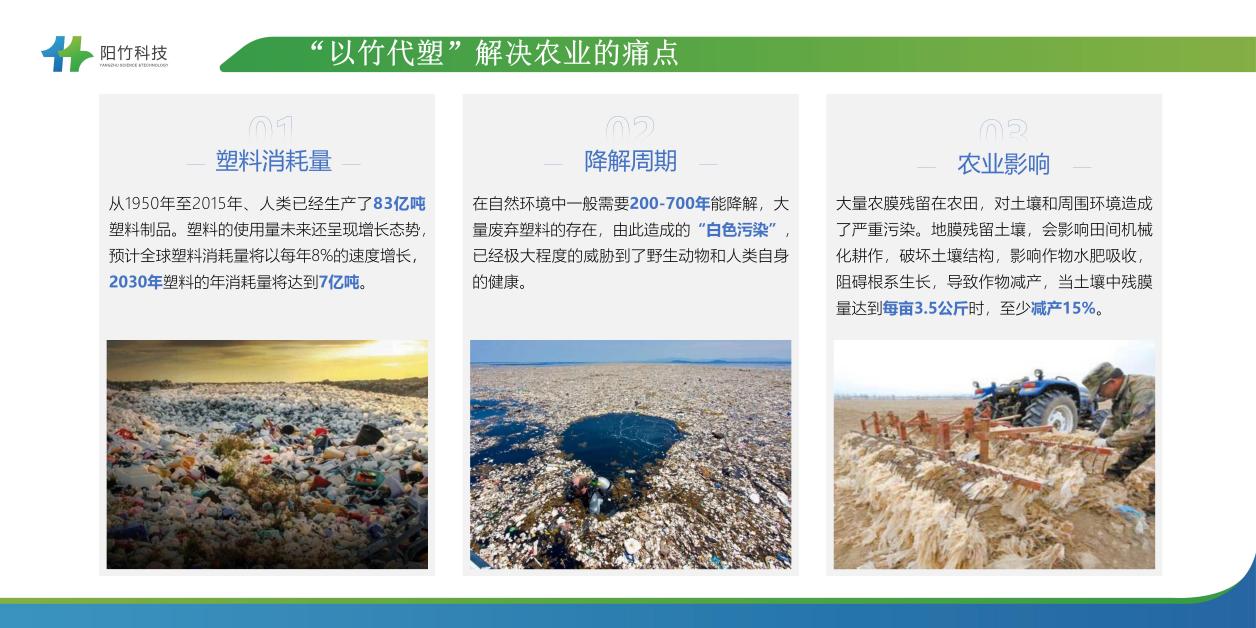
“Plastic is humanity’s worst invention” (quoted from the 2002 UK newspaper *The Guardian*). For decades, the widespread use of conventional plastic agricultural films has not only ensured robust agricultural production but also imposed a heavy environmental burden, posing significant risks to human health and contributing to the persistent and intractable issue of “white pollution.”
1. High-Pressure Policy Strikes
To curb white pollution, national policies continue to tighten. As of now, 22 provinces across the country have either introduced or upgraded local bans and restrictions on plastic products. Notably in the agricultural film sector, provinces like Hainan and Henan have already enacted comprehensive plastic bans—prohibiting the use of traditional plastic products, including non-biodegradable agricultural films.
2. Soil Ecology in Crisis
The hazards of residual agricultural film are alarming. These remnants are nearly impossible to degrade in the soil, and over time, they accumulate, leading to soil compaction and reduced permeability—severely hindering root growth as well as the absorption of water and nutrients by crops. Data show that when the amount of residual film per mu of farmland reaches approximately 3.5 kilograms, the average yield of affected crops can drop significantly by around 15%. This has become a major threat to food security, ecological conservation, and the sustainable development of agriculture.
3. Cost Bottlenecks Remain Difficult to Overcome
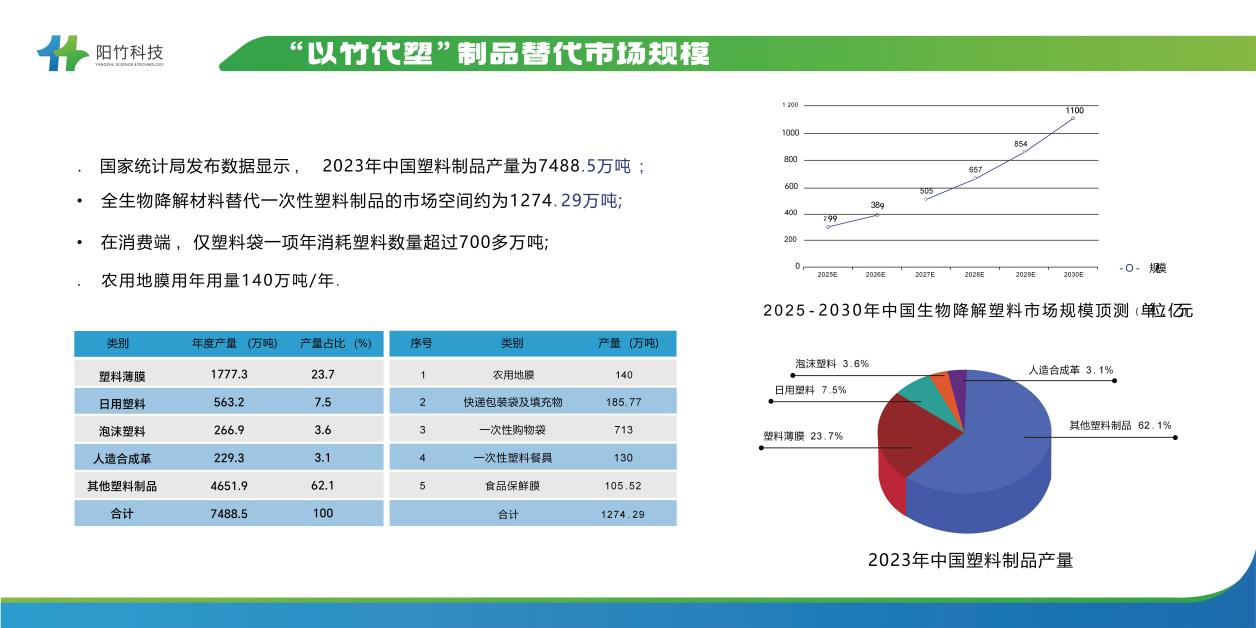
The high cost of fully biodegradable agricultural films has become a major obstacle to their widespread adoption. While fully biodegradable films represent the future of sustainable agriculture, their steep price tag continues to hinder large-scale implementation. On the market, even the most mature biodegradable materials typically sell for over 20,000 yuan per ton—significantly higher than the price of traditional polyethylene agricultural films (PE films), which hover around 12,000 yuan per ton. This price disparity discourages farmers, agricultural cooperatives, and farms from making the switch.
II. Four-Dimensional Innovation: Yangzhu Technology’s Path to Breakthrough
Facing numerous challenges, Yangzhu Technology, guided by national strategies, has sought solutions in China’s unique resource advantages and technological innovations—embracing the concept of "replacing plastic with bamboo." Over the years, the company has achieved remarkable progress through systematic, four-dimensional innovation centered on bamboo-fiber biodegradable mulch films.
1. Core Technology Revolution: Tackling the Challenge of Lightweight, High-Strength, and Biodegradable Materials
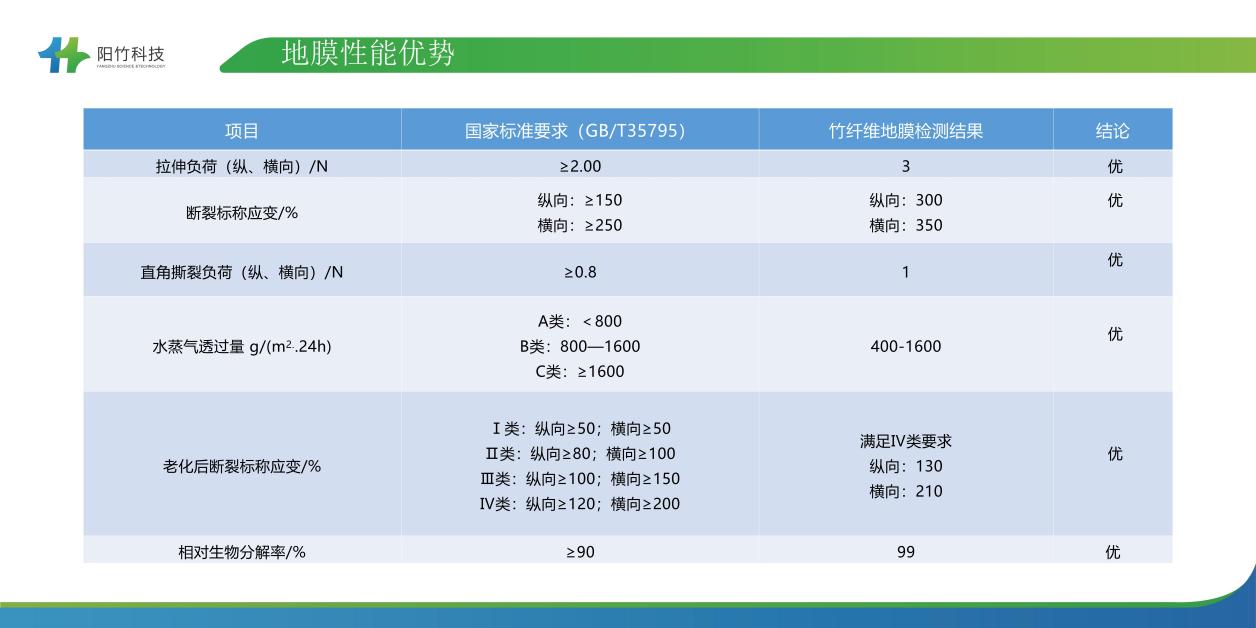
Yangzhu Technology's core product is a fully biodegradable bamboo-fiber material with a density ranging from just 0.65 to 0.96 g/cm³. Through a specialized process, Yangzhu Technology modifies and integrates bamboo fibers with the biodegradable polymer PBAT, significantly reducing the weight of mulch film per unit area. This not only cuts down on material usage and transportation costs but, more importantly, addresses the common issue of traditional biodegradable films—being prone to tearing due to their high density and insufficient strength—by achieving a perfect balance of lightweight design and exceptional durability.
2. Building a Closed Loop Across the Entire Industry Chain: Turning Bamboo Forests into Gold Mines
Yangzhu Technology has successfully established a closed-loop, full-industry-chain model—from bamboo materials all the way to finished products. Its pioneering "bamboo crushing — ultra-fine pulverization — modified extrusion — blow molding" process chain enables the efficient and high-value utilization of bamboo resources.
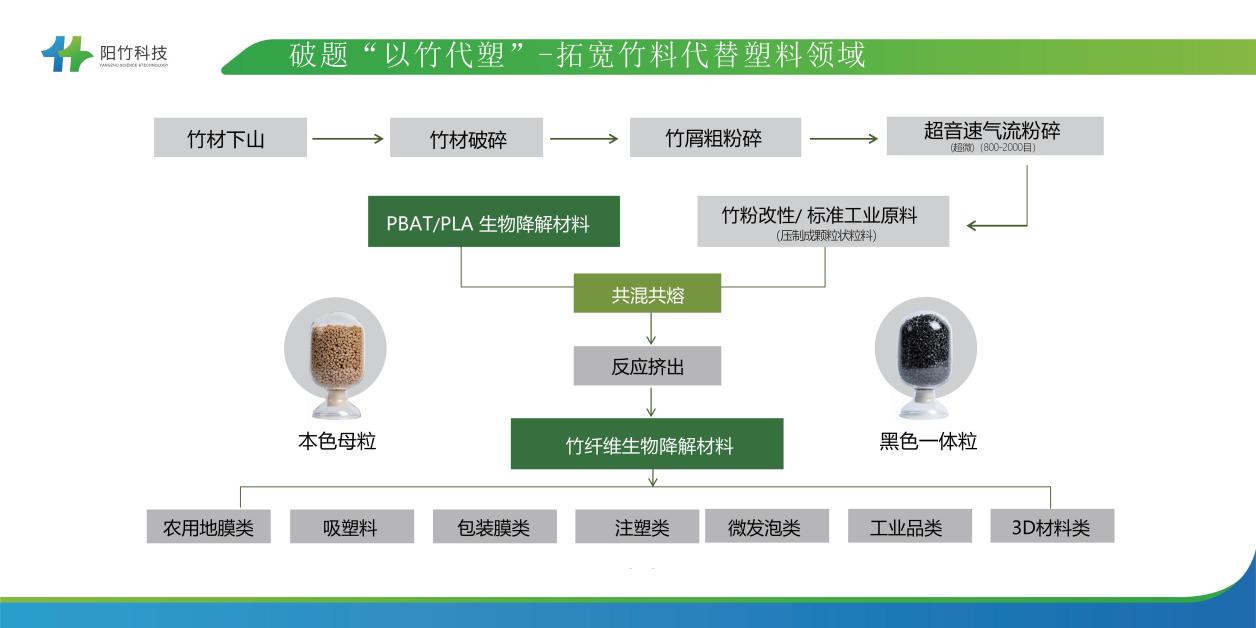
Yangzhu Technology has achieved the full-scale utilization of bamboo waste and processing by-products through its integrated bamboo fiber industry chain. What were once discarded or sold at low prices—referred to as "bamboo waste"—are now transformed into high-quality bamboo fiber raw materials thanks to advanced deep-processing techniques like ultra-fine pulverization.
3. Precision Policy Coordination: Pioneering a Living Lab, Setting New Standards
Yangzhu Technology deeply understands the importance of combining technological innovation with effective policy implementation. To help address agricultural film residue pollution, Yangzhu Technology has actively collaborated with the Ministry of Agriculture and Rural Affairs, the Chinese Academy of Agricultural Sciences, the International Bamboo and Rattan Organisation, the Shanxi Provincial Department of Agriculture and Rural Affairs, and provincial tobacco research institutes to conduct application verification of bamboo-fiber-based, fully biodegradable mulch films. This collaboration aims to establish standards for nationwide promotion of these eco-friendly films, laying a solid foundation for their comprehensive replacement of traditional plastic mulch films.
4. Multi-dimensional Cost Reduction and Efficiency Enhancement: A Practical Path for Scalable Expansion
Cost has always been one of the core considerations when it comes to market adoption and application. Through technological innovation and full-chain optimization, Yangzhu Technology has significantly reduced the overall production cost of fully biodegradable mulch film. Currently, the cost of large-scale production is only about 70% of that for traditional fully biodegradable films, making the product not only competitive in terms of performance but also price—effectively replacing conventional PE mulch films. This breakthrough provides a substantial solution to overcoming the cost barriers hindering the widespread adoption of fully biodegradable mulch films.
Currently, Yangzhu Technology has established and deployed over 100 demonstration and application promotion bases nationwide, covering typical scenarios such as plastic film applications tailored to "various environments" and "different crops," spanning regions from "south to north" and "west to east." These bases provide localized validation to meet the specific needs of diverse areas and crop types. 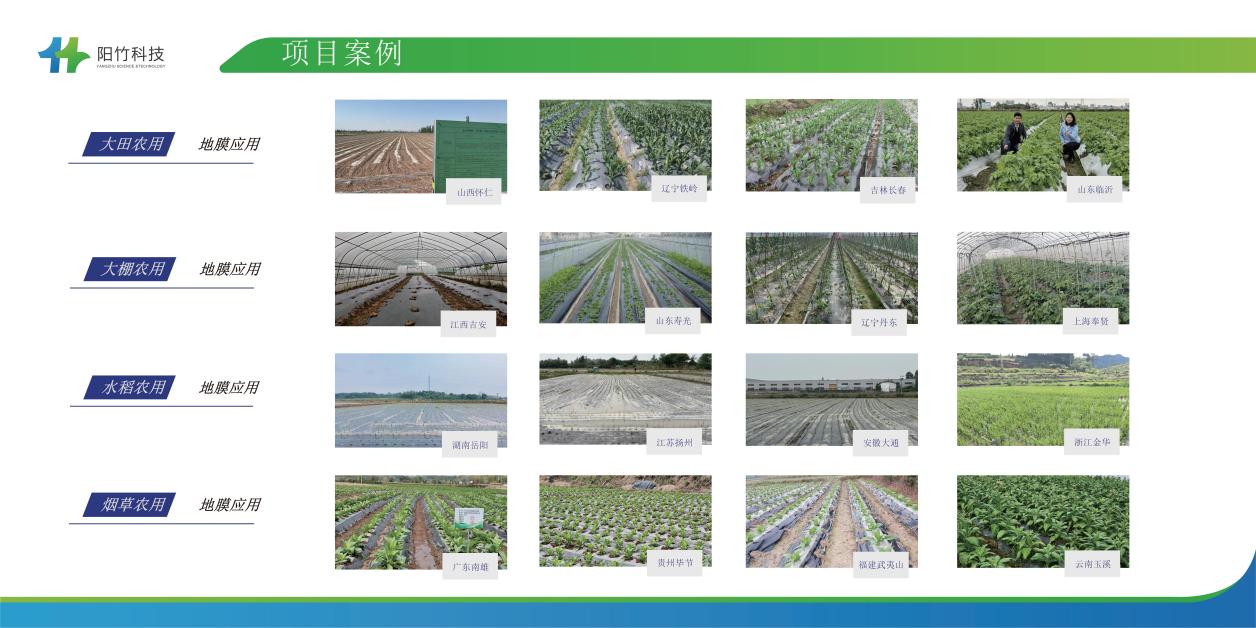
III. A Bamboo Pole Driving a Green Revolution: Yangzhu Technology Showcases China’s Solution to the World
With the increasing adoption and widespread use of Yangzhu bamboo-fiber biodegradable mulch films, the value they bring extends far beyond simply replacing plastic—they represent a profound, green revolution driven by "a single bamboo stalk," with far-reaching implications for sustainability.
Yangzhu Technology’s model seamlessly integrates ecological conservation with rural revitalization. By innovatively establishing the "Enterprise + Cooperative + Farmer" mechanism, bamboo farmers have shifted from solely selling raw bamboo to becoming a dual-income group—earning revenue from both raw material sales and wage employment. According to statistics, the bamboo fiber mulch film project alone has created over 15,000 jobs across the industry chain, providing a new pathway for boosting farmers' incomes in bamboo-producing regions as part of the broader "Rural Revitalization" initiative.
General Manager Rao Shizhen emphasized: "We carry forward the wisdom of Eastern bamboo—not only as a substitute for plastic, but also by offering the world a sustainable Chinese solution for planetary well-being." In the face of a grim global scenario where plastic consumption is rising by 5% annually, Yangzhu Technology’s strategic market approach of "replacing plastic with bamboo" demonstrates to the world that Chinese companies are already taking decisive action to tackle the growing crisis of white pollution.
From bamboo groves to cities, from tradition to modernity
Yangzhu Technology has always adhered to the vision of "Leading the shift from plastic to bamboo, contributing to a Beautiful China," aligning itself with the nation’s dual-carbon strategy while striving to secure a leading position in the global green industry—and leveraging closed-loop innovation to tackle the persistent challenge of "white pollution." 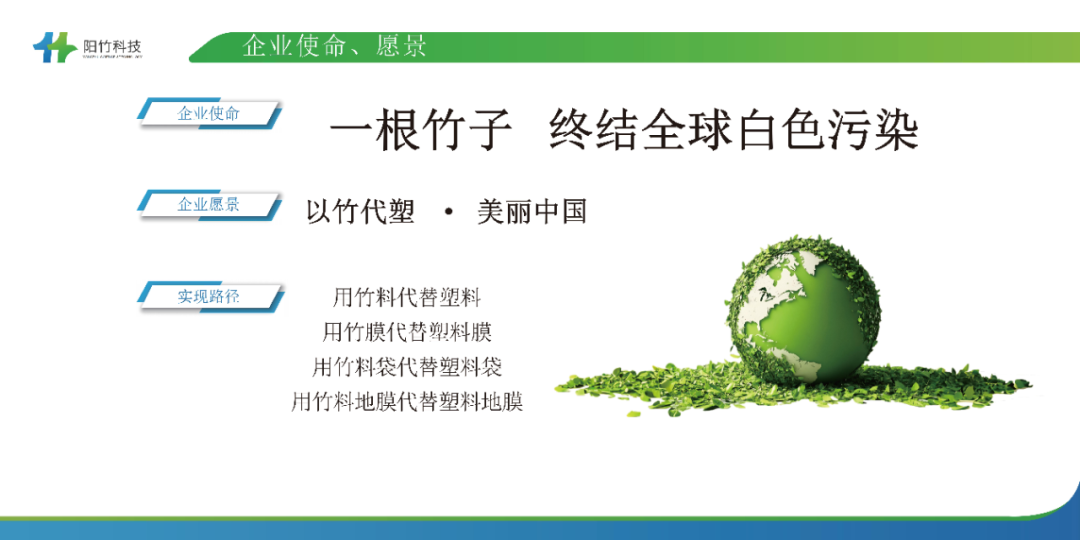
Recommended News


Official Account

Mobile app